
The Making of White Wolf, Part 7 of 7. When I watched the first full rough cut on August 28, I could see the movie and all the ways it was not finished. That was a useful kind of disappointment. It gave me a list instead of a vague feeling.
One visual world, hundreds of source shots
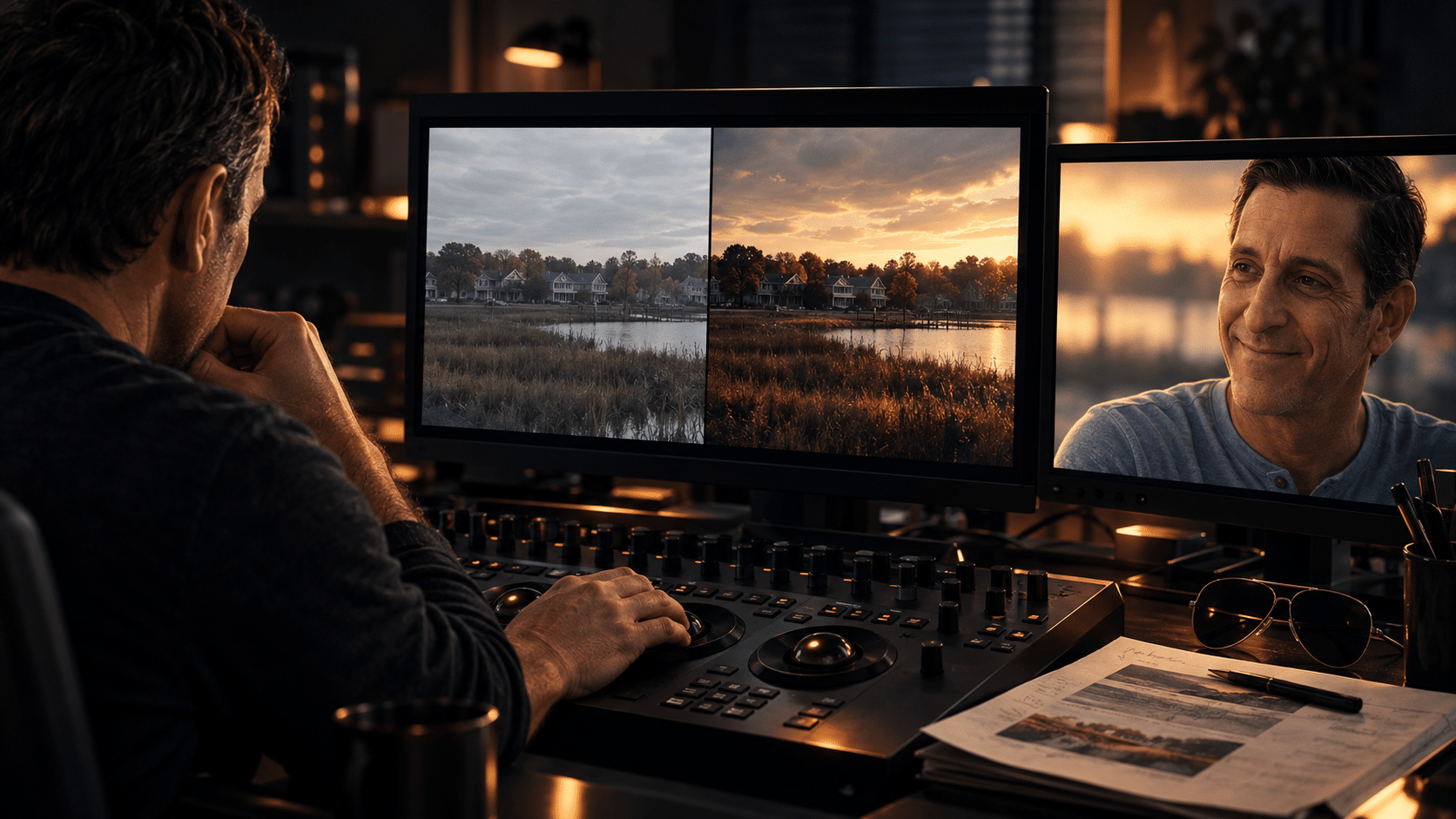
Generated takes arrive with different light, exposure, color temperature, and texture. Placed back to back, they can announce themselves as separate creations even when the performances and edit work. In Premiere, I used Lumetri to balance shots, bring faces back into a believable range, and help adjacent scenes belong to the same world. I also used DaVinci Resolve Studio for deeper color work where it helped.
My order of operations mattered: get a shot technically sound, match it to its neighbors, then shape the mood of the scene. A beautiful grade on one isolated frame is useless if the cut into it feels like someone changed movies. That is why I kept returning to the timeline after every visual pass.
The versions taught me where to look
The second rough cut was out by September 7. On September 14, I put a fuller cut in front of my toughest audience: my family. Their reactions helped me make a stronger third version. By mid-September, version five was being treated as a detailed quality-control pass, with specific notes for image, pacing, dialogue, and sound rather than broad guesses about whether it worked.
That shift was enormous. I could ask whether a transition held, whether a sound cue was covering a word, whether a shot matched the scene around it. Those are repairable questions. Each pass took away a few more reasons for a viewer to remember the tools.
The timeline, from the beginning
- Late May: eighteen character looks gave the people and visual world an early shape.
- June 22: thirteen chapters and an epilogue were mapped; roughly thirty-five clips and the first eight minutes were in motion.
- July 28: principal photography reached 84% complete.
- August 13: footage for the feature was shot and the rough assembly was underway.
- August 28: the first full rough cut exposed the real post-production work.
- September 7–mid-September: the second cut, family feedback, stronger third version, and the V5 quality-control pass.
Version five was not a finish line. It was proof that the film could be improved by looking honestly at what was on screen and making the next specific change. The later versions have their own story, and I have shared those more recent rounds separately. This series is the road that got us there.
The part I am proudest of is still simple: a film that began with character sketches in May had become something I could watch, challenge, and keep making better.
Previously in this series: Fixing the Frame Without Losing the Scene: WAN 3.0 and Prime. Start the series from Part 1.
Leave a Reply