
The Making of White Wolf, Part 4 of 7. There is a strange moment in an AI-assisted production when your folder says you have a film and your timeline says you have a mountain of unrelated files. The distance between those two statements is where editing begins.
Making the footage usable
A lot of the source footage began as 1280 × 720 clips. I had to inspect takes, upscale the shots that were going forward, check the results for faces and edges, and get the material organized so it could be cut without losing track of what belonged where. A sharper image is not automatically a better image; it still has to survive the next cut.
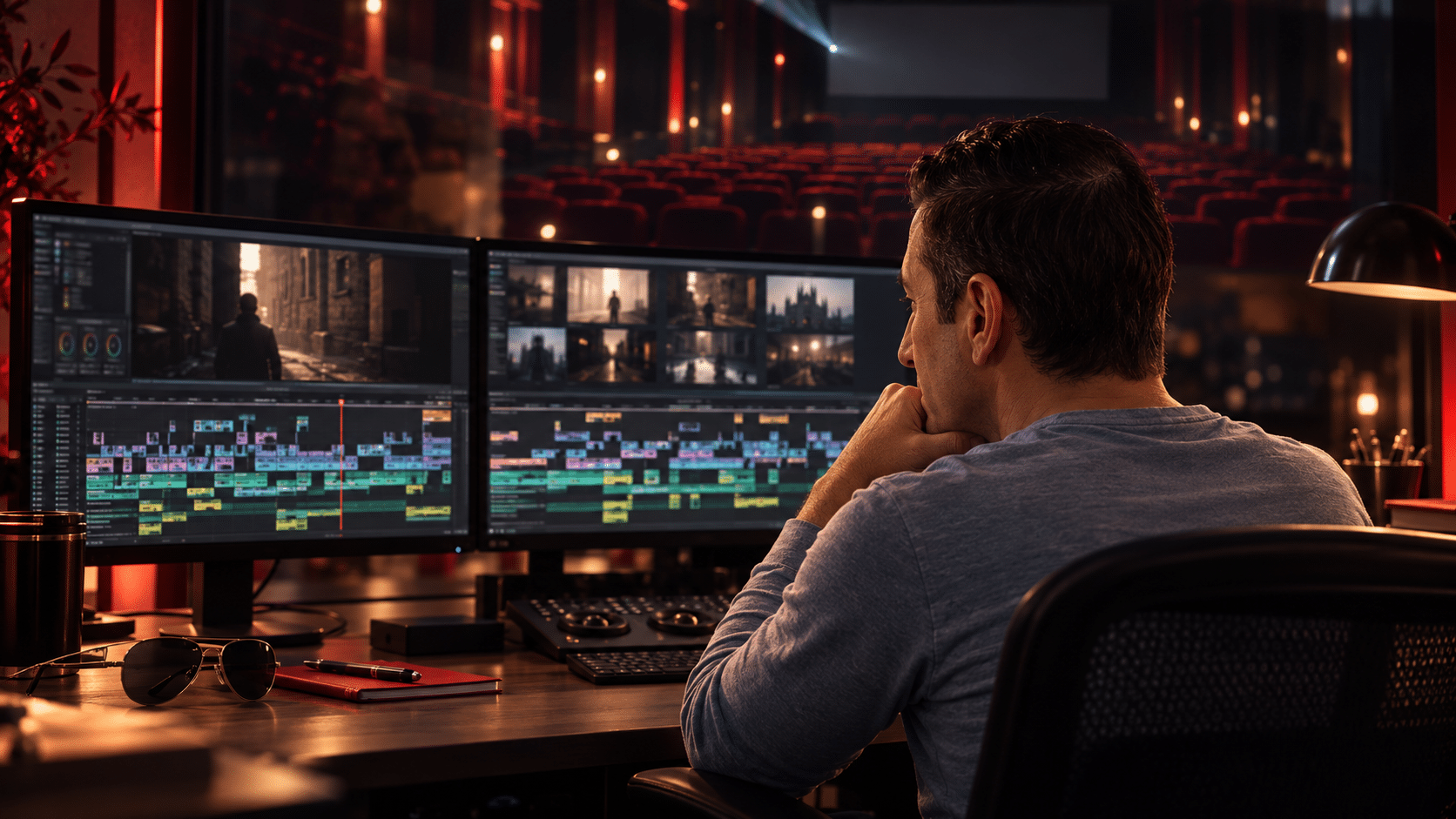
Premiere Pro became the place where the individual pieces turned into chapters. I could lay down the story, build reactions and transitions, replace weak angles, and move a shot when it played better somewhere else. A spectacular standalone clip can slow a scene to a crawl. A modest reaction shot can hold the entire moment together. The timeline makes those truths painfully obvious.
By mid-August, the photography was complete and the first assembly was forming. On August 28, I had a first full rough cut. I said publicly then that it was encouraging and rough, and I meant both words. Seeing the whole thing gave me a map of the missing work.
The trailer goes ahead of the feature
While the feature kept improving, I chose to send the trailer to festivals first. The trailer can introduce White Wolf and start that conversation while I keep doing the slower work the full movie deserves. It is a first look, not a claim that the feature is already locked.
Today we expect to hear whether the White Wolf trailer was selected by AI.motion. The festival is devoted to cinema created with AI and is hosted at IULM University in Milan. Its October 9–10 program is described as including screenings, talks, and workshops; its listed submission areas cover AI narrative shorts, music videos, and advertising. FilmFreeway currently lists September 27 as the notification date. I am waiting for the actual notice before calling the result either way, and I will share it once I have it.
Whatever the festival says, the work in Premiere continues. The milestone I care about most is still the same: when the next viewer presses play, the movie should carry them from scene to scene without making them think about how the pieces were made.
Next: finding a musical pulse for those scenes with Suno v5, then moving the score until it actually fits the picture.
Previously in this series: Three Hundred Clips, One Movie: Shooting with Pollo and Seedance. Start the series from Part 1.
Leave a Reply