
The Making of White Wolf, Part 5 of 7. Music can fool me faster than almost anything else in an edit. Put a strong cue under an uncertain scene and, for a minute, it feels finished. Then I turn the music down and discover what the scene is really doing.
A score before a locked cut
I used Suno v5 to build original instrumental material for White Wolf. By early August, I considered the score broadly complete even though the movie itself was still being assembled. That sounds backward until you live inside an edit: the themes and moods could exist early, while their precise locations had to be earned later.
I wanted a sound that belonged to this particular movie, not a generic “epic” cue laid over every action beat. A piece had to know when to carry momentum, when to hold back, and when a little texture was more valuable than a wall of sound. My years playing guitar made me especially sensitive to tone and phrasing, but the picture gets the final vote.
The cue is not the scene
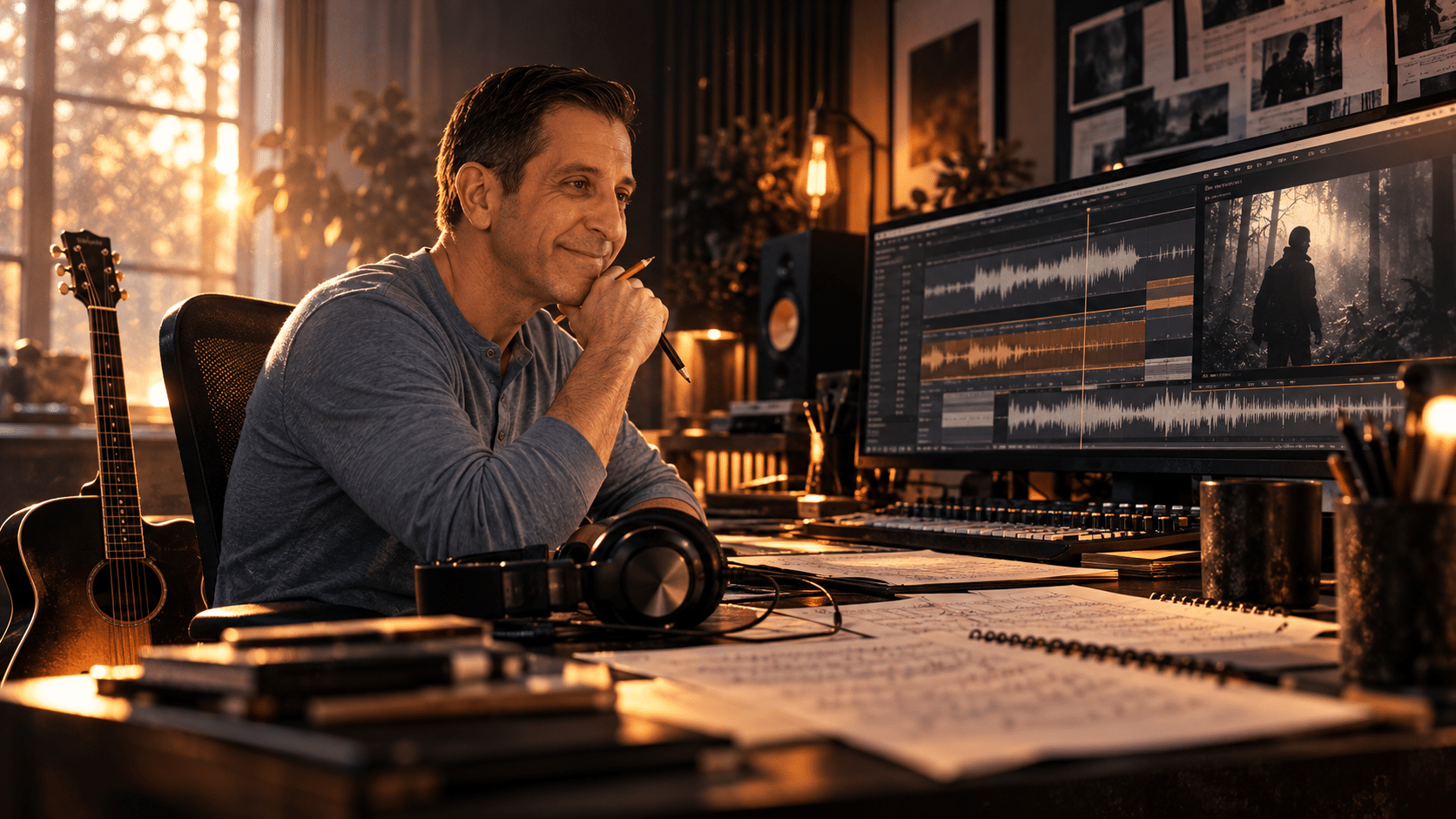
Once music reaches Premiere, I can place it against the action, cut it at an actual emotional turn, and hear what happens to the dialogue and ambient world around it. A cue that worked on its own might begin too early. A promising ending might need room after the last note. If a conversation has finally found its own tension, the right musical decision can be to leave it alone.
As the cut changed, I moved and shortened music rather than protecting the first placement. Sometimes that meant rethinking the purpose of a whole passage. The score was part of the edit, not a finish coat I could pour on top after everything else.
What I am listening for
I want the audience to feel the film’s shift without hearing me insist on it. That takes restraint as much as a memorable theme. The best cue is not always the one I like most in isolation; it is the one that makes the moment land and then gets out of the way.
The process made the story clearer to me, too. When a cue refused to fit, the problem was sometimes the music. Other times it was the scene asking to be recut.
Next: the tiny visual mistakes that can pull an audience out of a movie, and how I repair the shot without rebuilding the whole sequence.
Previously in this series: From Footage to Film: The Premiere Timeline and an AI.motion Decision. Start the series from Part 1.
Leave a Reply